
A tooth needs to come out
Oral surgery and wisdom teeth in Moorebank and Prestons
Sometimes a tooth can’t be saved, or a wisdom tooth is causing pain or problems. Your dentist assesses the tooth with an X-ray first, explains the options and the risks, and removes it where that’s the right choice.
Preferred provider funds




 Prestons
only
What your fund pays back depends on your policy.



When it may be needed
A tooth that can’t be saved
Severe decay, a deep crack or advanced gum disease can mean a tooth can’t be predictably restored.
Wisdom teeth
A wisdom tooth that’s stuck, only partly through, keeps getting infected or is damaging the tooth next to it.
Before other treatment
Sometimes a tooth is removed as part of a plan for an implant, a denture or orthodontic treatment.

How it works
Assessment and X-ray
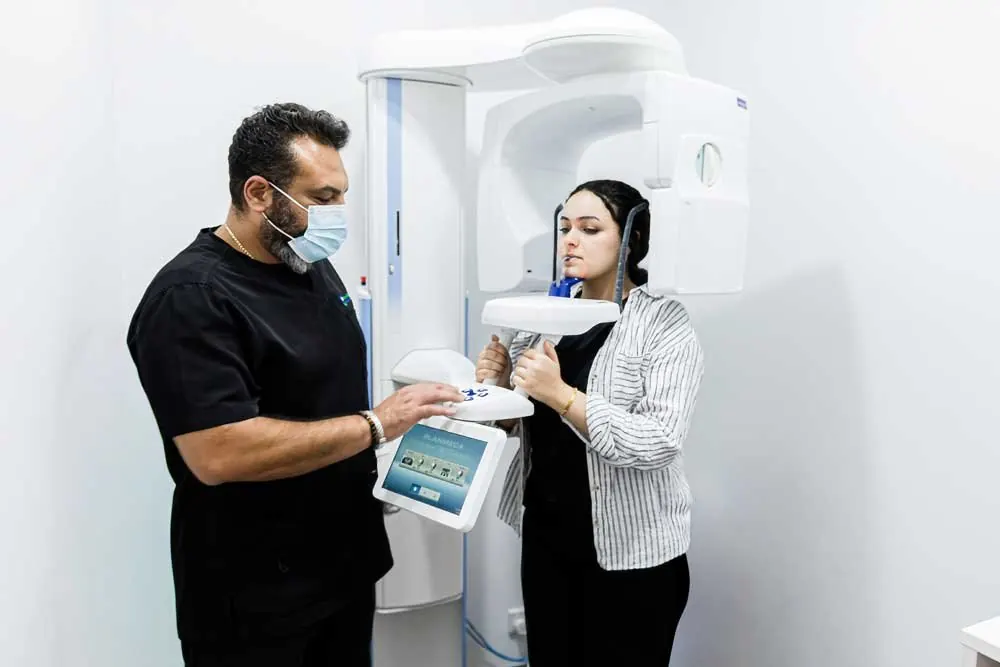
Your dentist examines the tooth and takes an X-ray, often a panoramic one for wisdom teeth, to see the roots and nearby nerves.
Your options and quote
Your dentist explains whether the tooth can be saved, what removing it involves, the risks and the cost, before anything goes ahead.
Removing the tooth
The area is numbed with a local anaesthetic. Some teeth come out simply; others need a small cut in the gum or the tooth removed in pieces.
Recovery
You get written aftercare instructions. Some swelling and discomfort for a few days is common, and your dentist tells you what to watch for.
What it costs
The price depends on the tooth and how complex the treatment is, so it starts with an assessment from $75, with X-rays extra if you need them. After the assessment, your dentist tells you what removing the tooth will cost before anything goes ahead.
Alternatives, limits and risks
Alternatives
- Root canal treatment or a crown, where the tooth can be saved
- For wisdom teeth that aren’t causing problems, monitoring with check-ups and X-rays
After a tooth is removed
- A gap can be left, or replaced with an implant, a bridge or a denture
- Your dentist talks through replacing it before the tooth comes out
Limitations
- Some complex teeth, such as deeply buried wisdom teeth, may be referred to an oral and maxillofacial surgeon
- What can be done on the day depends on the assessment
Risks
- Pain, swelling, bruising and bleeding
- Dry socket, when the blood clot is lost and the socket becomes painful
- Infection, and for lower wisdom teeth, numbness of the lip, chin or tongue, which is usually temporary but can rarely be lasting
Any surgical or invasive procedure carries risks. Before proceeding, you should seek a second opinion from an appropriately qualified health practitioner.
Who you’ll see


Ask for any of them by name when you book.
Questions
Do wisdom teeth always need to come out?
No. Wisdom teeth that have come through properly, or are buried without causing problems, can often be left and checked at your regular visits. Your dentist recommends removal when a tooth is causing pain, infection or damage, or is likely to.
Will I be awake?
Yes. The tooth and the area around it are numbed with a local anaesthetic, so you feel pressure but shouldn’t feel sharp pain. If a tooth needs a different approach, your dentist talks through a referral.
How long does recovery take?
Most people feel better within a few days, though it varies with the tooth and the person. Your dentist gives you aftercare instructions and tells you what to look out for.
How much does it cost?
It depends on the tooth and how complex the removal is, so it starts with an assessment from $75, with X-rays extra if you need them. Your dentist then tells you the cost before treatment.
What if the tooth is causing pain right now?
Call the clinic. We prioritise dental pain and urgent cases throughout the day.
See you soon.
Moorebank: Monday to Friday 9am to 6pm, Saturday 9am to 2:45pm. Prestons: Monday to Friday 9am to 6:30pm, Saturday 9am to 2:45pm.